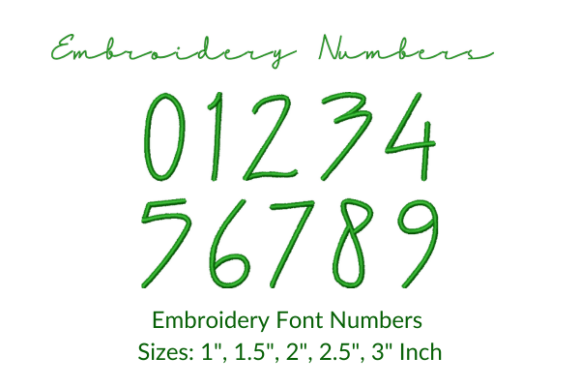
Gistesy Number Fonts: A Business Design Review
As an embroidery designer working daily with small business branding and merchandise, I constantly evaluate new fonts for their professional utility. Today, I’m reviewing the Gistesy Number Fonts Embroidery Design from the perspective of a commercial decorator. My focus isn’t on casual craft projects, but on how this design functions as a tool for building brand identity through embroidered patches, uniforms, and merchandise.
First Impression: Clean and Functional Design
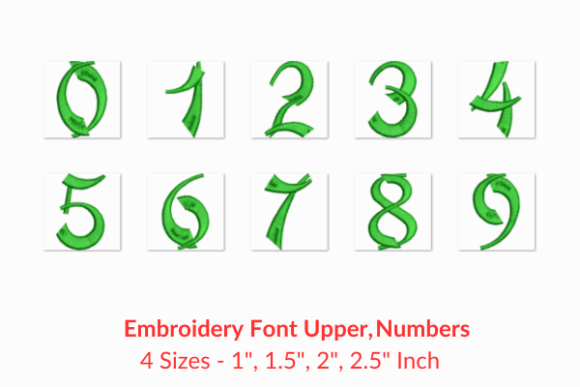
The title Gistesy Number Fonts Embroidery Design suggests a specialized, practical tool. It promises to help personalize designs, which is the core need for any business creating custom apparel. Based on this, I expect a clean, legible font. It feels professional and modern—a straightforward asset meant to be used, not merely decorative. This is crucial for businesses like cafés, studios, or boutiques that need their branding to communicate clarity and reliability.
Real-World Business Applications
Let’s walk through concrete scenarios where this embroidery file could become a key business asset.
Branded Patches and Product Labels
For a handmade shop, pet brand, or florist, an embroidered patch serves as a premium product label or a customer gift. The Gistesy Number Fonts Embroidery Design could be used to stitch production dates, limited edition numbers, or personalized order numbers directly onto the patch. This adds perceived value and a layer of thoughtful, handmade presentation.
Staff Uniforms and Professional Apparel
A bakery needing numbered aprons for staff or a creative studio wanting unique identifiers on work shirts could use this font effectively. Embroidered on a chest logo accent or sleeve detail, clear numbers aid in organization while maintaining a cohesive, professional look. It reinforces internal systems and customer trust in a structured business.
Merchandise and Customer Engagement
For Etsy sellers or merch creators, numbers on tote bags (like a series number), caps, or event merchandise (such as anniversary dates) create a sense of exclusivity. Using the Gistesy Number Fonts Embroidery Design to add “2024” or a customer’s lucky number on a gift transforms a generic item into personalized, branded merchandise, directly boosting buyer engagement.
Where This Design Requires Careful Use
Every embroidery design has practical limits, and a business must test before full-scale production.
- Small Patch Sizes: If you’re creating tiny patches for product packaging accents, test the font at a very small scale first. Ensure the numbers remain perfectly legible; condensed fonts can blur at minimal sizes.
- Curved Surfaces: Embroidering on cap fronts requires a design that can adapt to the curve without distortion. A test run is essential to check the alignment and spacing.
- Fabric and Washability: For uniforms or aprons that endure frequent washing, stitch density matters. A very dense design on textured fabric like denim or a dark uniform might require specific stabilizer and thread color contrast checks to ensure longevity.
Impact on Brand Identity and Professionalism
Choosing the right embroidery design is a brand decision. The Gistesy Number Fonts Embroidery Design, if clean and well-executed, contributes to visual consistency. For a local business, consistent, sharp numbering on all merchandise—from tote bags to staff aprons—builds recognition. It signals attention to detail, which customers equate with premium product value. A playful boutique might use it for a numbered series of products, while a professional service might use it for clean, understated identification. Its affect depends entirely on its application alongside your other design assets.
Practical Designer Notes for Business Implementation
Before you run this digital embroidery file on a hundred uniforms, follow these steps. They save time, money, and protect your brand’s quality.
- Test in Black and White First: Run a sample using high-contrast thread colors (black on white fabric, white on black fabric) to evaluate the core shape and legibility without color distractions.
- Check Small-Scale Performance: Hoop a small swatch intended for a patch size and stitch it. Inspect the spacing between numbers and the overall clarity.
- Review Thread Color Contrast: Choose thread colors that stand out against your standard uniform or merchandise fabric. What works on a light tote bag may vanish on a dark work shirt.
- Test on Real Fabric: Use the actual fabric you’ll produce on—canvas for tote bags, twill for caps, poly blend for uniforms. Pair it with the proper stabilizer for that fabric texture.
- Create a Printable Mockup for Client Approval: If you’re a decorator serving other businesses, generate a mockup showing the font applied to their cap or apron. This prevents miscommunication.
- Compare Beside Other Assets: Place the embroidered sample next to your existing logo or branding. Does it complement your visual identity?
- Confirm Commercial Licensing: The product description notes it’s for personalizing designs. Before using it for commercial embroidery projects for your business or clients, verify the license terms allow for business use. This is a critical, often overlooked step.
The Final Stitch
The Gistesy Number Fonts Embroidery Design presents itself as a functional tool for personalization. For a small business, its value lies in its application—transforming generic numbers into branded elements that enhance product value, staff identity, and customer connection. Its success hinges not on the file alone, but on your thoughtful testing and integration into your commercial embroidery workflow. Approach it as a business asset, test it as a professional designer, and it can become a reliable part of your branded merchandise toolkit.